 Alika
Alika
 Deutsch
 Português
 Español
 Română
 Bosanski
Concept
A ZHV is organised around the tasks that need to work at home. Specialised pathways bring together suitable rooms, aids and partners; social conditions and relatives’ perspectives belong in every pathway.
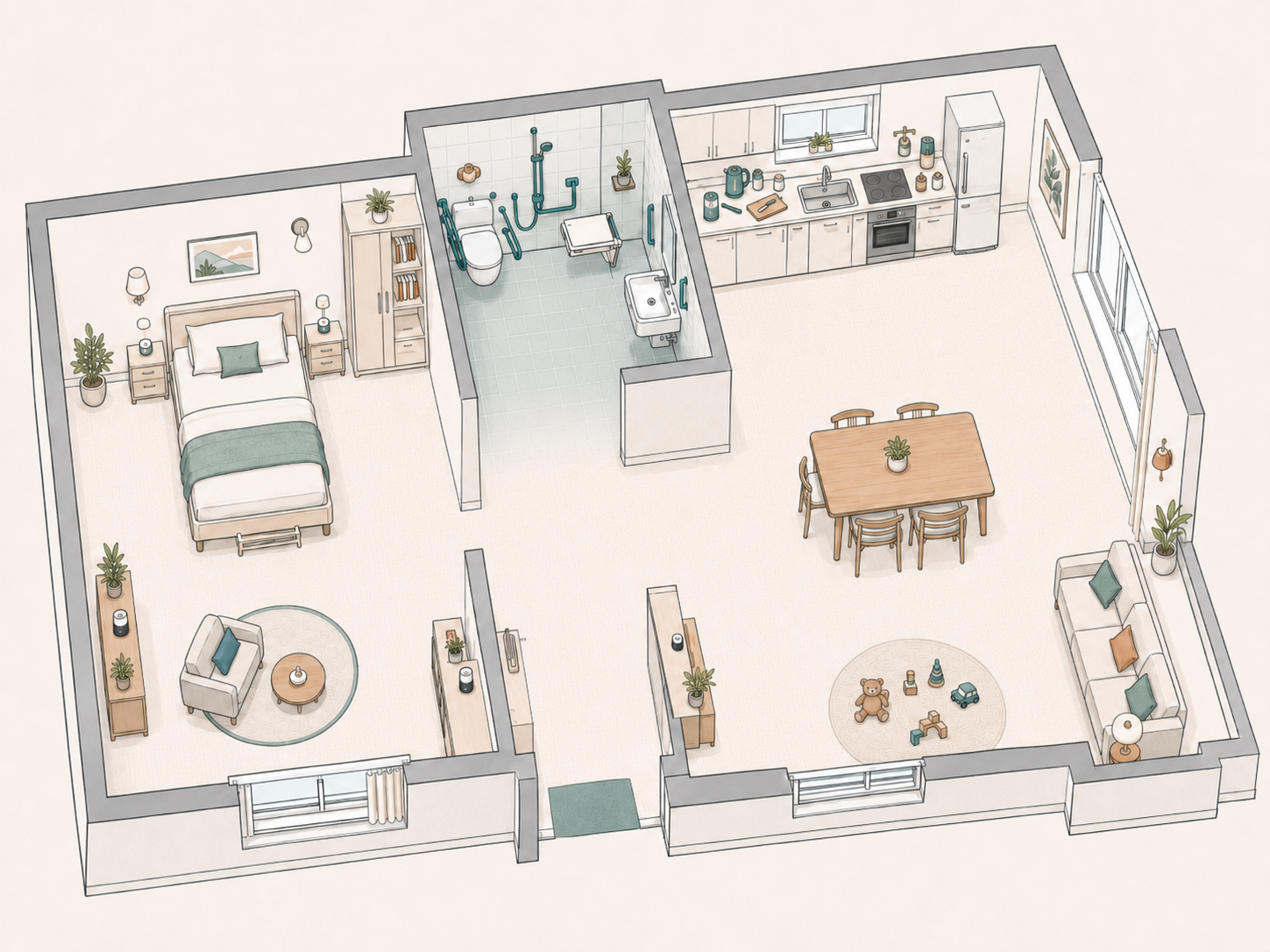
People and everyday tasks
| Focus | Everyday task |
|---|---|
| Neurology | After stroke, with Parkinson’s or MS: transfers, handling objects, communication and fluctuating capacity. |
| Parents and child | Care and sleep routines, parental confidence, play, siblings and dependable relief. |
| Geriatrics and mobility | Bed, bathroom, kitchen and night routes; using aids and building confidence in movement. |
| Orthopaedics | Stairs, joint protection, pacing and a suitable arrangement of furniture and aids. |
| Cognition and orientation | Clear daily anchors, calm surroundings and manageable morning and evening routines. |
| Breathing and fatigue | With pulmonary, cardiac or oncological burdens: coordinate activity, rest, indoor conditions and treatment routines. |
| Complex support | With multiple disabilities or palliative needs: connect positioning, communication, privacy and family expertise. |
| Social transitions | Build access to language support, social services, sustainable housing and neighbourhood contacts. |
ZHV at IfWf
Information about transitional living, the ZHV concept and cooperation is available from IfWf at wohnforschung.org.
Visit IfWf